Frequently Asked Questions
What is a DONA-approved doula trainer?
A DONA-approved trainer is a birth doula trainer who has been reviewed and approved by DONA International to conduct trainings leading to DONA certification. The approval process includes an application, documentation of experience, and review of training materials. Students who complete a DONA-approved training are eligible to pursue DONA birth doula certification, which requires completing additional steps after training: DONA membership, a required reading list, three qualifying births totaling at least 15 hours of continuous support, and submission of a certification packet. New to all of this? Start with how to become a doula.
Does birth doula certification affect your ability to accept insurance or Medicaid?
Yes, significantly. Medicaid doula programs, which now exist in a growing number of states, require certification through recognized organizations. DONA International and CAPPA are the organizations most commonly named in state program requirements. Private insurance credentialing works similarly: insurers build their approved provider lists around established certifying organizations. A certificate from a self-certified trainer or a lesser-known organization will likely not qualify you for these programs. If you have any intention of billing Medicaid or accepting insurance, confirm which certifications your state's program and your target payers accept before choosing a training.
What is the difference between a 3-day doula training intensive and a multi-week format?
Both formats cover the same curriculum. The difference is pacing and cognitive load. A 3-day intensive runs full days, typically 8 to 9 hours per day, compressing the full training into a single weekend. A multi-week evening or morning series spreads the same content across several weeks, with sessions of 4 to 5 hours each. The intensive works well for people who can dedicate a full weekend and retain information under compressed conditions. The multi-week format works better for people who need time between sessions to process material, or whose family and work schedules make a full-weekend commitment difficult. Neither is easier or more rigorous than the other.
What educational components are required for DONA birth doula certification?
DONA certification requires three educational components: completion of a DONA-approved birth doula training workshop, a childbirth education component (DONA's CBE Requirement), and a lactation component (DONA's Lactation Requirement). Some trainings bundle all three into the tuition; others sell only the workshop and require students to find and pay for the other components separately. Before registering, ask the trainer specifically whether the CBE and lactation requirements are included in the cost.
Can military spouses get funding for doula training?
Military spouses may be eligible for MyCAA (My Career Advancement Account) funding, a federal tuition assistance program available to eligible active-duty military spouses. MyCAA can be applied toward approved training programs. This option is not widely discussed in doula training marketing, but it is a real resource. Eligible military spouses should investigate MyCAA before assuming training is out of reach financially.
I've been a doula for years but never got formally certified. Can I still get DONA certification?
Yes, but you will need to complete a DONA-approved training workshop first. DONA certification requires completion of an approved training regardless of prior experience. Many experienced doulas who built their practice without formal certification find themselves needing DONA credentials when they want to join a hospital program, get credentialed with an insurer, pursue Medicaid billing, or take a next step like becoming a trainer. At that point, completing the training is the required starting point, regardless of how long they've been attending births.
How long do I have to complete DONA certification after finishing doula training?
DONA gives you three years after your training workshop to complete the full certification process. That process includes maintaining DONA membership, completing the required reading list, attending three qualifying births that total at least 15 hours of continuous support, and submitting your certification packet. The three-year window is generous, but it does require staying engaged. Doulas who finish training and then lose touch with the process often struggle to complete certification by the deadline.
What to Look for in a Birth Doula Training (And What Most People Skip Over)
Most people searching for doula training spend the first hour comparing two things: price and date. Those are real constraints, so I understand it. But I've trained more than 10,000 doulas over 30 years, and the questions that actually predict whether someone finishes certification, feels prepared at their first birth, and builds a sustainable practice almost never come up in that first search.
So before you put a deposit on anything, read this.
The short version: the certifying organization behind the training matters, what's included in the tuition determines your real cost, and the format you choose will predict whether you actually complete it. Those three factors will tell you more than the price tag.
A few things most people don't think to ask:
- "Approved" and "recognized" are not the same thing, and that distinction matters once you start working
- The cheapest training rarely turns out to be the most affordable once you see what's missing from the tuition
- Format is not just a scheduling preference. It shapes how much you retain and whether you finish
What does birth doula certification actually mean?
Birth doula certification is not standardized across the industry. Different certifying organizations have different requirements, different reputations, and different levels of recognition with hospitals, birth centers, and health systems.
The two largest certifying organizations in the United States are DONA International and CAPPA (Childbirth and Postpartum Professional Association). Both are established, have clear certification pathways, and are widely recognized. There are smaller organizations as well, and some are legitimate. The variable worth paying attention to is whether the trainer you're considering is approved by a recognized organization, or whether they've created their own certification that exists independently of any external credentialing body.
A DONA-approved trainer has gone through a rigorous application and review process with DONA International. They're authorized to run trainings where students can pursue DONA certification. That's a meaningful credential for the trainer, and it protects the student: you know the training meets DONA's standards, and your path to certification is clear.
A trainer who offers only their own certificate of completion may be genuinely skilled. Some are excellent. But if you ever apply to work at a facility or join a practice that asks for DONA certification, that certificate of completion won't get you there.
I've been a DONA International Approved Birth Doula Trainer for decades. I mention that not to pitch you on my program, but because it's the standard I use when I advise anyone on what to look for. Ask the trainer directly: what organization approves this training, and what does completion allow me to pursue?
One honest note: not every birth doula needs formal certification to practice. Some states have no requirements, and independent practices don't always ask for it. If you know you want to work with a specific hospital system or group practice, find out what they require before choosing a training.
If you want to accept insurance or Medicaid, the certifying organization is not optional
This is where the stakes of that "approved vs. self-certified" question become very concrete.
Medicaid doula coverage programs are expanding across the United States. More states are passing legislation that allows doulas to bill Medicaid for their services. That is genuinely good news for birth equity and for doulas who want to build a sustainable, accessible practice. But those programs come with requirements, and one of the most common is certification through a recognized organization. DONA International and CAPPA are the names that show up repeatedly in state program requirements. A certificate from an organization you've never heard of, or one the trainer invented themselves, is unlikely to qualify you.
The same applies to private insurance credentialing. As doula coverage expands through employer benefit programs and private insurers, the credentialing processes those payers use are built around established certifying organizations. If your certification doesn't come from one of the orgs on their approved list, you're not getting credentialed, regardless of how much you know or how good you are at your work.
This is the part that stings for doulas who chose a cheaper or faster training without thinking through the business implications. The training is done. The money is spent. And then they find out their certification won't allow them to participate in their state's Medicaid doula program, or that an employer benefit platform won't credential them. Switching at that point means paying for training again. I've had people come to my training who have been practicing as doulas for years. They're experienced. They know birth. They chose a training program early on that didn't lead to recognized certification, and now they need DONA certification to do the next thing they want to do. Maybe it's joining a hospital program. Maybe it's becoming a trainer themselves. Maybe it's getting credentialed with an insurer. Whatever the reason, they're starting the process over.
The details of insurance credentialing and Medicaid eligibility get complicated quickly, and every state and payer does it a little differently. I've written a fuller breakdown of how doula insurance and Medicaid work here: Can Doulas Take Insurance? What You Really Need to Know. The short version for choosing a training is this: know what payment pathway you're hoping to use before you choose a program. If you want to support people on Medicaid, make sure the certification you're working toward is one that will actually qualify you for your state's program. If you want to work in a hospital setting or a C-section support program, find out what credentialing they require. Then trace that requirement back to the training that gets you there. Don't choose a training and hope the credential works out. Start with the credential you need and work backward.
What happens after doula training? The certification process most trainers don't explain
This is the part that surprises most new trainees, and I wish more trainers explained it upfront.
Training is step one of certification. It is not the whole thing.
For DONA birth doula certification, completing the workshop is the beginning. From there, you have three years to complete the full process: join DONA as a member, work through the required reading list, attend three qualifying births totaling at least 15 hours of continuous support, and submit your certification packet for review. DONA evaluates the packet and issues certification.
That process is manageable. Most doulas who stay engaged with it get certified. The ones who don't usually didn't know what they were signing up for. They did the training, lost momentum, and had no one to check in with because nobody explained what came next.
Before you register for any training, ask: what support does the trainer offer for the post-training certification process? Is there a community you can stay connected to? Mentorship?
Format is not just a scheduling question
Most trainings come in a few formats: a multi-day intensive, a multi-week evening series, or a spread-out morning structure. My training runs as a 3-day intensive (typically 8:30am to 5:30pm each day), a 5-week evening series (one evening per week, 6 to 10:30pm), or a 5-day morning series (five consecutive mornings, 9am to 1:30pm). All Eastern time, all virtual via Zoom.
The format that works for you is not simply a question of which dates fit your calendar. It's a question of how you actually learn and what your life realistically looks like right now.
A 3-day intensive covers the same material as a multi-week format, but the pacing is very different. By the afternoon of Day 3, you've absorbed a significant amount of content in a compressed window. That works well for some people. For others, especially those who are parenting, working full-time, or managing a lot at home, arriving at the final day depleted is not a recipe for retaining what you learned.
The multi-week format gives you time between sessions to process, ask questions, and let the material settle. The tradeoff is that it asks you to show up consistently over several weeks, which requires a different kind of commitment.
If you have a day job and a family, a multi-week evening format may work better than a weekend intensive where you're exhausted by Sunday afternoon. If you need to fit training into a specific window before a life change, the intensive might be the right call. Neither format is easier. They make different demands.
Choose the format that matches how your brain works, not the one that looks the most convenient on paper.
What should actually be included in the tuition?
This is where the "cheapest training" problem usually shows up.
DONA certification requires three educational components: the birth doula workshop itself, a childbirth education requirement, and a lactation requirement. Some trainings include all three in the tuition. Many do not. They sell the workshop and then refer you to separate courses for the childbirth education and lactation components, each with its own cost.
By the time you add those up, a training that looked affordable up front may cost significantly more than one that included everything from the start.
My training includes all three components: the Birth Doula Training Workshop, Introduction to Childbirth (which satisfies DONA's CBE Requirement Option A), and Lactation for Birth Professionals (which satisfies DONA's Lactation Requirement Option 1). I include them together because I don't think trainees should have to hunt down separate courses or budget for something that's already part of the certification pathway.
When comparing trainings, ask specifically: does the tuition include the childbirth education and lactation components required for DONA certification, or are those additional?
Funding and payment options for doula training
If cost is a barrier, you have more options than most people realize.
Military spouses may be eligible for MYCAA (My Career Advancement Account) funding, a federal tuition assistance program. This is not widely known in the doula world, but it's a real resource. If you're a military spouse, it's worth looking into before assuming training is out of reach.
Payment plans are standard among legitimate trainers. What matters is flexibility. A training with a single rigid plan is not the same as one that works with you if something comes up.
Some trainers, including me, offer community seats (reduced tuition for those with financial need) and equity seats (further reduced tuition for those who face systemic barriers to training). These aren't charity. They're an acknowledgment that birth work needs a diverse, representative workforce, and pricing structures should support that.
A training with no flexibility, no payment plan, and no reduced-tuition option is worth thinking carefully about. Not because the content is necessarily poor, but because of what it signals about how that trainer thinks about access to the field.
Five questions to ask before you register for any doula training
| Question | Why It Matters |
|---|---|
| Is the trainer approved by a recognized certifying organization? | Determines whether your path to certification is clear |
| What's included in the tuition? | Prevents unexpected costs after you register |
| What format fits your actual schedule? | Predicts whether you'll complete it and retain the material |
| What post-training support exists? | Affects whether you finish certification and feel ready at your first birth |
| What are the funding or payment options? | Determines real accessibility |
Before you commit, work through this checklist:
- Confirm the trainer's certifying organization (easy, five minutes on their website or one email)
- Ask for a clear tuition breakdown showing what's included (easy, one question before you register)
- Map the format against your real weekly schedule, not your idealized version of it (requires honest self-assessment, rated medium difficulty for a reason)
- Read what the certifying organization requires after training (fifteen minutes on the org's website, worth every minute)
- Ask about post-training community, support, or mentorship options (easy, one conversation)
The right training is one you'll actually finish
I've watched doulas choose trainings based entirely on price or availability, then struggle to finish certification because they didn't understand what was required or because they ran out of momentum after the training ended. No fault of their own. They just didn't have the full picture going in.
The training is foundational. What you learn there shapes how you show up at your first birth, your fifth birth, your fiftieth. It deserves real consideration.
The field is moving in positive directions. Virtual training is well-established and accessible regardless of geography. More trainers are building in equity pricing. Post-training mentorship is becoming a normal expectation rather than a bonus.
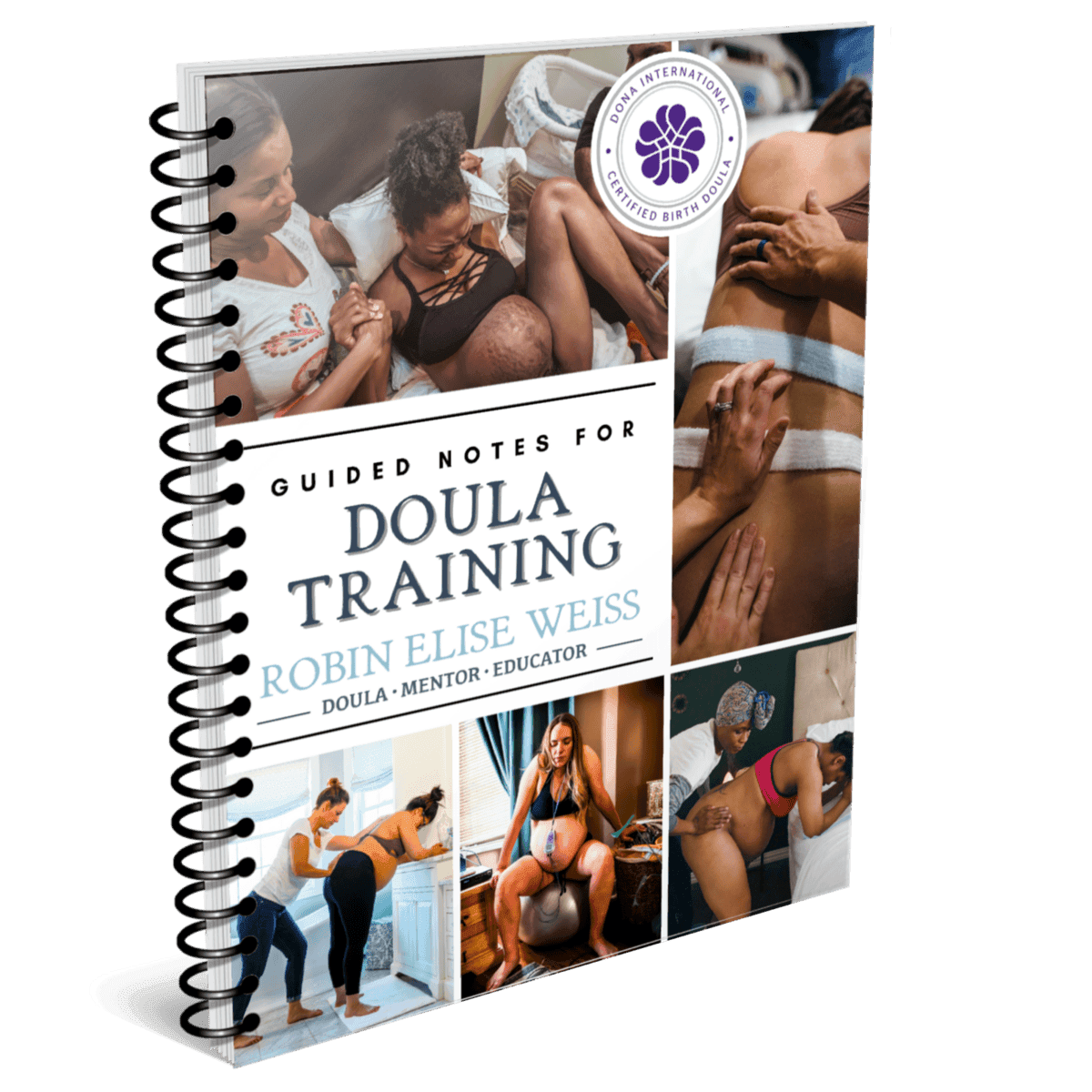
If you're looking for where to start, LearnToBeADoula.com/training has full details on my DONA-approved program, including all three formats, pricing, payment plans, equity seat information, and upcoming dates. If you have questions about the right fit for where you are right now, that's exactly the kind of thing I'm here to help with.
Robin Elise Weiss, PhD, MPH, MSHPE, AdvCD(DONA), BDT(DONA), PMH-C is a DONA International Approved Birth Doula Trainer with over 30 years of experience and more than 1,500 births attended. She has trained more than 10,000 doulas through her program at LearnToBeADoula.com.