BUILDING YOUR DOULA BAG
When I started attending births nearly 40 years ago, my bag looked very different than it does today. Over time, I’ve learned that the right tools can make a real difference in supporting a birthing person through labor, and the wrong ones can weigh you down without adding much value.
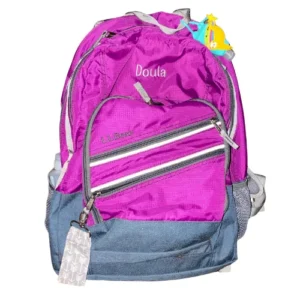
Your doula bag is personal. It will grow and change as you gain experience, complete additional training, and learn what works best for your practice and the families you serve. A new doula’s bag might be fairly simple, while a seasoned doula might carry specialized items like a TENS unit or peanut ball.
Here’s what I recommend as you build your birth doula bag, organized by how often I actually use these items in practice.
Items You’ll Reach for at Nearly Every Birth
Massage oil (unscented is safest) helps reduce friction when you’re doing hands-on comfort work like lower back massage, hip squeezes, or counter pressure. Coconut oil works well for many doulas. You’ll use this more than you expect.
Heat and cold options give you flexibility. A rice sock (rice in a tube sock tied at the end) can be microwaved for warm comfort on the lower back or shoulders. Cold washcloths in a small insulated bag feel wonderful on a laboring person’s face and neck during active labor. Having both options means you can respond to whatever feels good in the moment.
A phone charger is non-negotiable. Births are long. Your phone will die. Bring a portable charger so you can stay in contact with your backup and the family’s support people.
A rebozo or sheet belongs in every birth doula’s bag. This woven fabric has dozens of uses during labor: hip squeezes, belly sifting, supported squats, and the classic “shake the apple tree” technique. You can also hang it over a bathroom door for tug-of-war support during pushing. If you learn one comfort measure well, make it rebozo techniques.
Snacks and water for yourself are essential, not optional. I’ve attended births that lasted 30+ hours. You cannot support someone well if you’re hungry and dehydrated. Pack nuts, protein bars, and a reusable water bottle that you can refill. This is about sustainability, not selfishness.
Comfort and Atmosphere Items
LED candles or fairy lights can shift the energy of a hospital room. Dim lighting supports the release of oxytocin and helps a laboring person feel safer and more relaxed. Many hospitals don’t allow open flames, so battery-operated options are the way to go.
Essential oils work well for some clients (peppermint for nausea, lavender for relaxation), but always check with your client first about scent sensitivities. I use personal inhalers rather than diffusers since many birth settings restrict diffusing.
A portable speaker allows your client to play their labor playlist at a volume that actually helps set the mood. Phone speakers often aren’t loud enough.
Combs for acupressure have become popular in birth work. Some research suggests that gripping a comb in your palm during contractions may stimulate acupressure points that help with pain relief. Even if the mechanism is unclear, having something to squeeze can be grounding.
Items for Specific Situations
Tennis balls in a long sock create a tool for counter pressure on the lower back during back labor. You can also roll them along tight muscles.
A handheld fan provides cooling relief during the intense work of pushing or when a laboring person is feeling overheated.
A copy of your client’s birth preferences gives you a reference point and serves as a backup if the family forgets their copy.
A change of clothes for yourself is worth the space it takes. Birth can be messy, and you may need to go somewhere directly after.
Items That Require Additional Training
A TENS unit can be helpful for managing labor pain, especially for clients experiencing back labor. I’d recommend getting specific TENS training before adding one to your practice.
A peanut ball is useful for clients with epidurals to help open the pelvis in different positions. Check whether your local birth facilities provide these; if not, carrying one might be worthwhile.
What I’ve Stopped Carrying
Over the years, I’ve removed items that sounded good in theory but rarely got used. Healing stones, for example, never made it out of my bag. Multiple essential oil options became overwhelming. I’ve streamlined to what I actually reach for.
I also no longer bring a camera. Many doulas have moved away from birth photography due to scope of practice considerations and the availability of dedicated birth photographers. If a family wants photos, I recommend they hire a professional or ask a family member to handle it.
The Most Important Thing in Your Bag
After all these years, I can tell you that the most important thing you bring to a birth isn’t in your bag at all. It’s your presence, your calm confidence, and your training. A doula with an empty bag but solid skills will support a family far better than one with every gadget but no experience using them.
Start simple. Add items as you learn what works for your practice. Your bag will grow alongside your confidence.
Ready to learn the skills that matter more than any tool? Explore DONA-approved birth doula training →